
Addressing Solid Waste Challenges in Southeastern Connecticut
Connecticut’s Solid Waste Crisis
Connecticut’s solid waste crisis is impacting southeastern Connecticut municipalities, residents, and businesses. SECOG regularly coordinates with stakeholders around the region to better understand how we can promote municipal solid waste (MSW) practices throughout the region and otherwise assist around this critical municipal service.
SECOG Solid Waste Subcommittee
In May 2023, the SECOG Executive Board recommended the creation of a temporary subcommittee that would seek to gain a better understanding of municipal solid waste operations, capacity, and innovations in the region. The subcommittee first convened in July 2023 and met biweekly throughout winter of 2024. The goal of the subcommittee was to produce a list of recommendations that SECOG’s Legislative Committee could pursue for the 2024 Regular Session of the Connecticut General Assembly, and to prepare a white paper to share with member municipalities. At the direction of its Solid Waste Subcommittee, SECOG staff analyzed municipal solid waste data in the region, including disposal tonnage and municipal cost data, for the five-year period from 2018-2022. SECOG staff also conducted a local survey directed at municipal staff and agents who have the most direct role in managing solid waste and solid waste contracts. The subcommittee also aimed to gain a better understanding of municipal solid waste operations, capacity, and innovations in the region. Chief elected officials from SECOG municipalities shared their experiences and concerns and guests from the waste industry were invited to subcommittee meetings to share their expertise. Early subcommittee meeting discussions focused on general information about the solid waste crisis, such as the closure of MIRA and the most recent CMMS amendment. Subsequent meetings included discussions on single stream recycling, WTE ash, glass recycling, new technology, transportation considerations, and the bottle bill. For this information and more, please refer to Municipal Solid Waste in Southeastern Connecticut: Initial Findings and Next Steps.
Advocacy and Involvement
SECOG’s Solid Waste Subcommittee presents the following legislative action item recommendations that match local needs and priorities in our region:
- Enact mandatory food scrap & organics recycling
- Streamline disposal facility infrastructure permitting
- Allow increased waste-to-energy capacity
- Address local lack of redemption centers
- Use more recycled glass (glass cullet/crushed glass)
- Add to the extended producer responsibility (EPR) program
- Incentivize unit-based pricing
Resources
Municipal Solid Waste in Southeastern Connecticut: Initial Findings and Next Steps
Municipal Solid Waste in Southeastern Connecticut
Municipal Solid Waste StoryMap – Key findings from SECOG’s Solid Waste Report are summarized in the StoryMap below.
Map Optimized for MobileStormwater
THE REGIONAL STORMWATER COLLABORATIVE
SECOG facilitates and staffs the Regional Stormwater Collaborative (RSC). The RSC brings municipalities together to discuss and collaborate on shared stormwater management issues, explore regional developments in green infrastructure and utility improvements, and stay current on MS4 compliance. Meetings are held quarterly. If interested to learn more or attend an RSC meeting, email Michelle Maitland at [email protected]. The MS4 municipalities in the SECOG region include: East Lyme, Griswold, Groton (Town & City), Ledyard, Lisbon, Montville, New London, Norwich, Sprague, Stonington, and Waterford. As well, Colchester and Windham have been identified as communities which will be subject to the Permit when it is expectedly reissued in the Summer of 2026.
NEXT MEETING: Sep. 24th, at 8:30 AM, SECOG Office & Virtual
MUNICIPAL STORMWATER UTILITY RESOURCES
DECEMBER 15, 2025 STORMWATER UTILITY WORKSHOP MATERIALS
On December 15, 2025, SECOG, City of New London, and ARCADIS held an information session on Setting Up a Municipal Stormwater Utility. Presentation content covered how stormwater utilities can serve as an effective tool for reducing flooding and improving water quality, and the process by which stormwater utilities are established based on the experience of the City of New London. A video of the session and presentation materials are provided below.
2023 SECOG MUNICIPAL STORMWATER UTILITY FEASIBILITY STUDY
In 2022, SECOG secured a Municipal Resilience Grant from the Connecticut Institute for Resilience and Climate Adaptation to conduct a municipal stormwater authority feasibility study. Four member municipalities – Ledyard, Preston, Stonington, and Waterford – participated in the study as model communities. Read through study findings at this link: 2023 Municipal Stormwater Utility Feasibility Report or review the digital Stormwater Utility Resource Guide below for key findings.
Map Optimized for MobileOTHER RESOURCES
UCONN CT NEMO Program – an educational implementation guide on Connecticut’s MS4 permit geared towards municipal officials and planners in qualifying cities and towns.
General Permit for the Discharge of Stormwater from Small
Municipal Separate Storm Sewer Systems (MS4) – click through to explore the recently updated MS4 permit.
STORMWATER SUCCESS STORIES

TOWN OF STONINGTON
Section 319 Grant Award
Partnership with ECCD and WCWC to improve water quality via green infrastructure, educational campaign, and public outreach within greater Wequetequock Cove Watershed.
TOWN OF GROTON
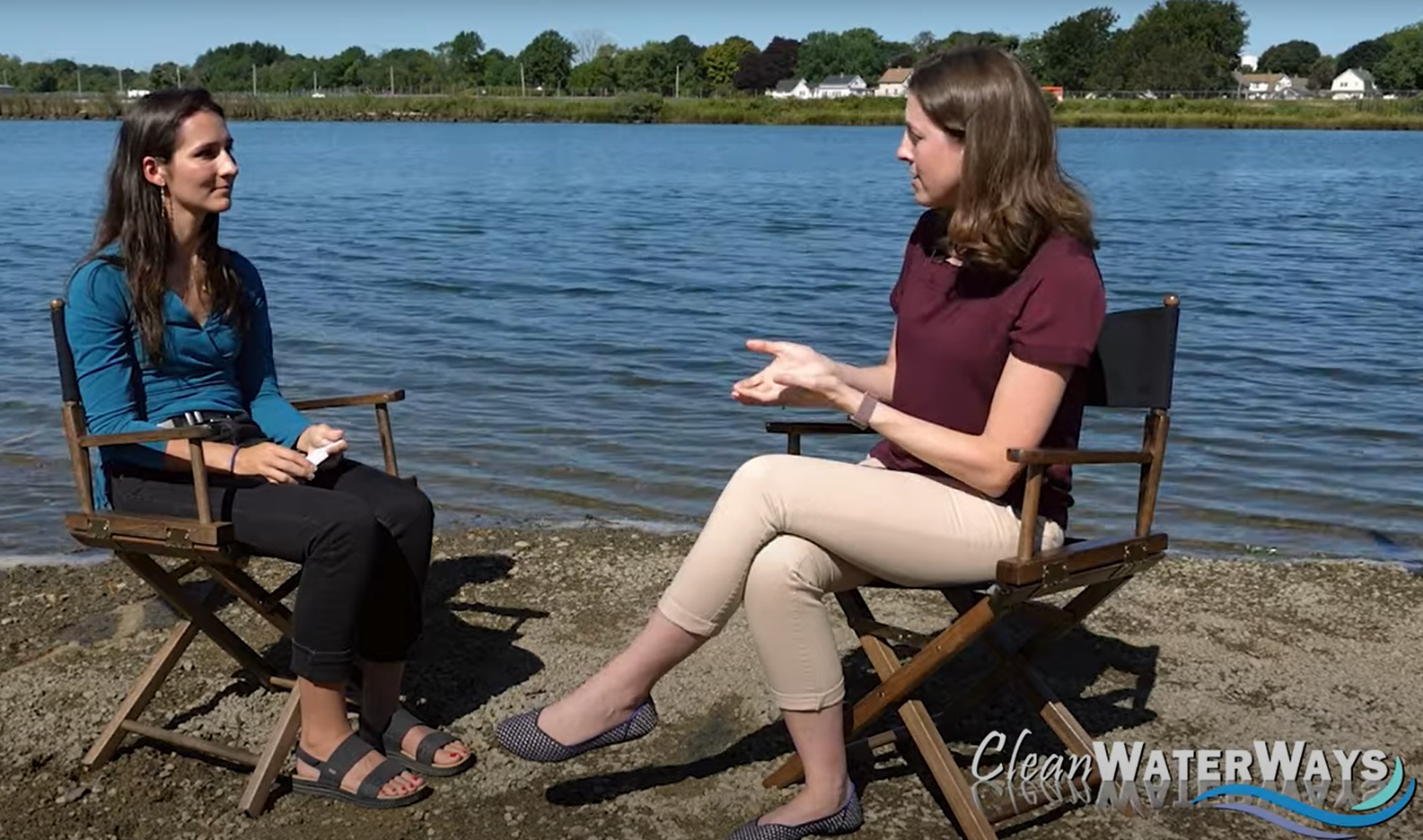
Video series collaboration between Save the Sound and the Town of Groton. The product serves as a great family-friendly public education resource for MS4 municipalities. View the full playlist here.

CITY OF GROTON
Stormwater Assessment & Concepts for 5 Corners
Stormwater assessment to closely study the affected areas and develop nature-based solutions.
Parcel and CAMA Data Improvement Grants Overview
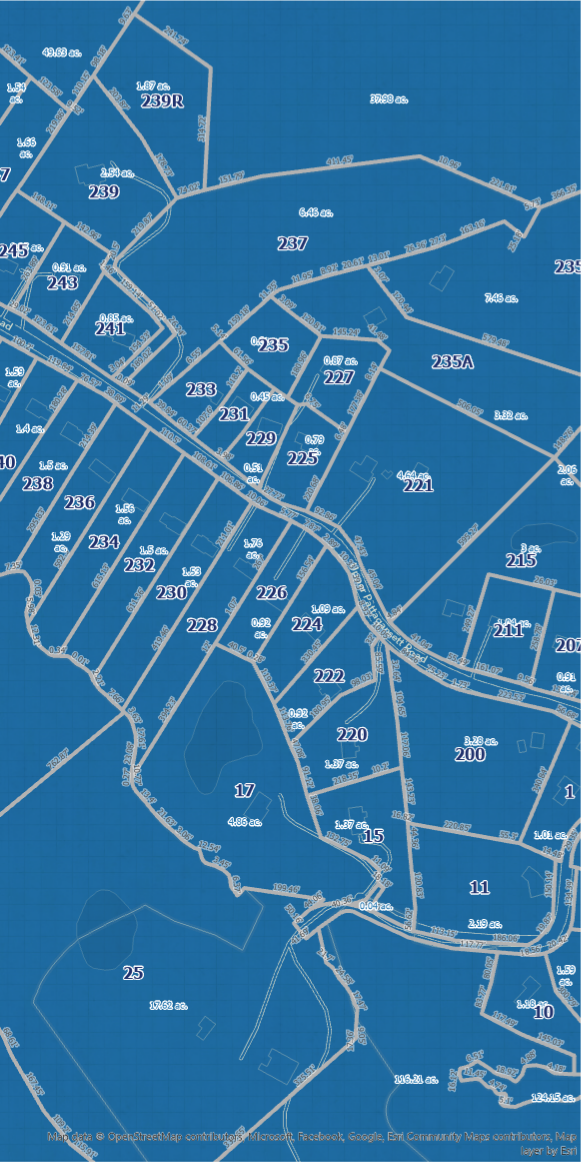
The Connecticut Office of Policy and Management (OPM) has allocated $2 million in American Rescue Plan Act (ARPA) funding to support Connecticut’s Councils of Governments (COGs) in addressing parcel and CAMA data issues within their member municipalities. SECOG has been allocated $229,900 of the $2 million for its member municipalities. This initiative aims to improve the accuracy, completeness, and recency of these datasets, ensuring municipalities have reliable and well-integrated property records.
The program will run from December 2024 through December 2026. To guide funding distribution, a prioritization framework was established, focusing on recency, match rates, completeness of CAMA fields, and geometric quality of parcel data. The scope of work and framework were refined through discussions with COG GIS Coordinators and municipal parcel and CAMA vendors.
Funding Prioritization
The SECOG will follow a three-tiered prioritization system to develop plans and allocate funds to municipalities.
Primary Funding Priorities (To be addressed in order)
- Recency: The highest priority is to ensure that parcel data is up to date. For municipalities that have not submitted updated data, funds should be used to bring their parcel data file to the most current status possible.
- CAMA to Parcel Match Rate: Every CAMA entry must have a corresponding parcel in the parcel layer. Municipalities with a CAMA to parcel match rate below 98% should be prioritized for the funding.
Secondary Funding Priorities (In any order)
- Completeness of CAMA Fields: Ensuring that the 38 attribute fields included in the Connecticut State Parcel Layer are as fully populated as possible for the municipality by addressing any issues or inconsistencies in the data.
- Parcel to CAMA Match Rate: Verifying that non-assessable parcels, such as rights-of-way and public lands, are correctly identified and that all assessable properties have a corresponding parcel in the GIS and are correctly linked to CAMA. Municipalities with a match rate lower than 99% should be prioritized.
Tertiary Funding Priority
- Geometric Quality of Parcels: Remaining funds may be used for the improvement of the geometric quality of parcels following recommendations from the GIS Office and GIS Advisory Council.
If you have any questions or comments, please reach out to David Cook via email at [email protected]
Safety Action Plan
Safety Action Plan
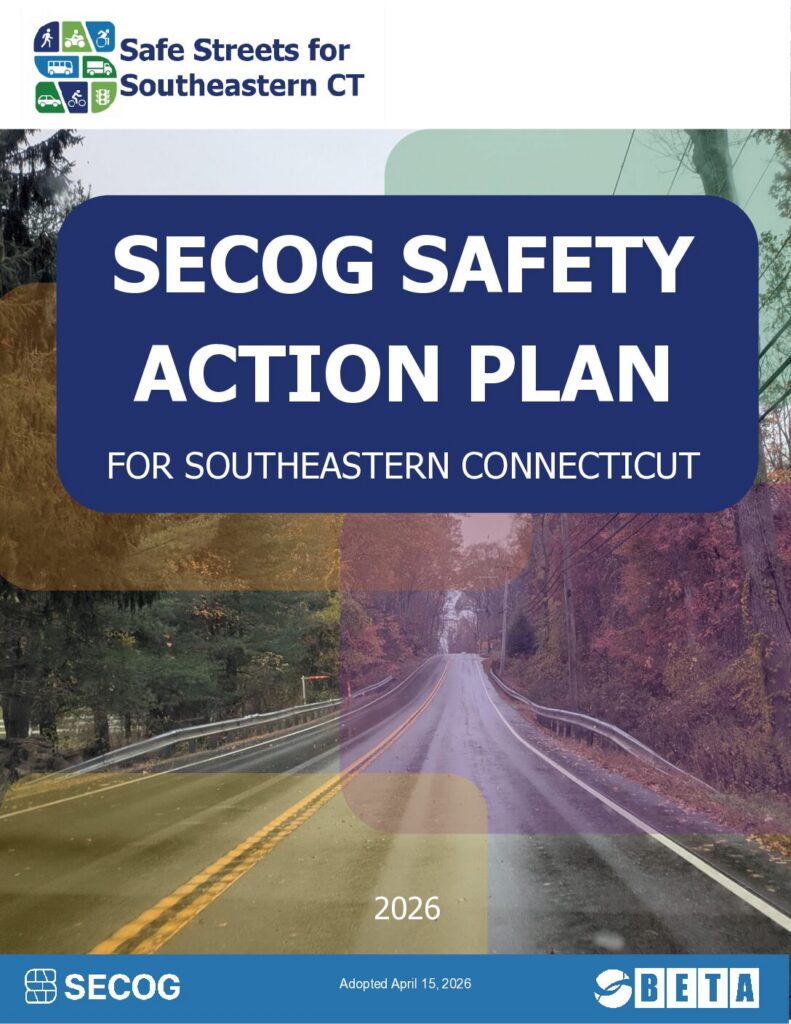
The Final Safety Action Plan Report is available.
If you are concerned about a particular safety issue please contact Kate Rattan
[email protected]
What is a Safety Action Plan?
Transportation Safety Action Plan (SAP) is a strategic document designed to improve the safety of transportation systems. It typically includes the following elements:
- Assessment of Current Safety Conditions: Analyzing data on transportation-related crashes involving vehicles, pedestrians, and cyclists to identify trends and high-risk areas.
- Goals and Objectives: Setting specific targets, such as reducing traffic fatalities and serious injuries, often aligned with broader initiatives like Vision Zero.
- Strategies and Actions: Outlining specific measures to enhance safety, including infrastructure improvements, policy changes, education campaigns, and enforcement strategies.
- Implementation Plan: Detailing how the strategies will be executed, including timelines, responsible parties, and funding sources.
- Monitoring and Evaluation: Establishing metrics to track progress and effectiveness, with regular updates and adjustments as needed.
These plans are crucial for securing federal funding under programs like the Safe Streets for All (SS4A) grant, which aims to create safer, multimodal transportation networks.
Public Workshops

In-Person meeting on January 22 from 5:30-7 pm at SECOG Office

Vison Zero Task Force Metting – Kick Off Presentation Slides
March 12, 2025

Vison Zero Task Force Metting – Meeting 2 Presentation Slides
May 15, 2025

Vison Zero Task Force Metting – Meeting 3 Presentation Slides
October 16, 2025
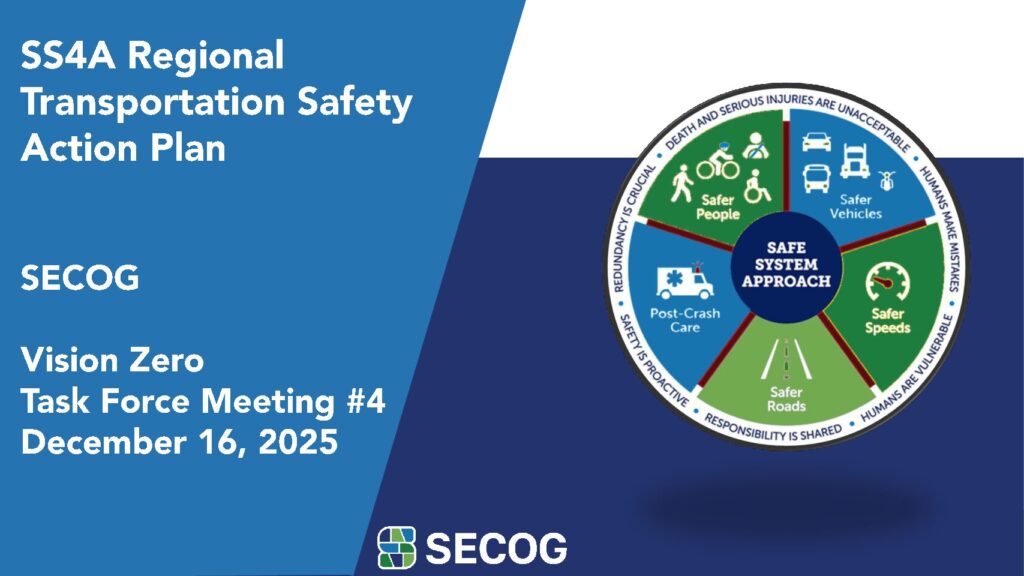
Vison Zero Task Force Metting – Meeting 4 Presentation Slides
December 16, 2025
SAP Project Dashboard
Below is a dashboard of project areas identified to address safety concerns based on historic incidents. Select a record from the table (sorted by Rank) to explore further information.
Crash Data
Explore the Crash Data in the Southeastern CT Region Map Below
Map Optimized for MobileSafety Action Plan Resources

2022 Safety Action Plan

FHWA Proven Safety Countermeasures

UCONN Training and Technical Assistance Center

Road Safety Audits